Residential
Drainage behind retaining walls, under garden beds and around foundations, plus French drains and moisture control beneath suspended floors.
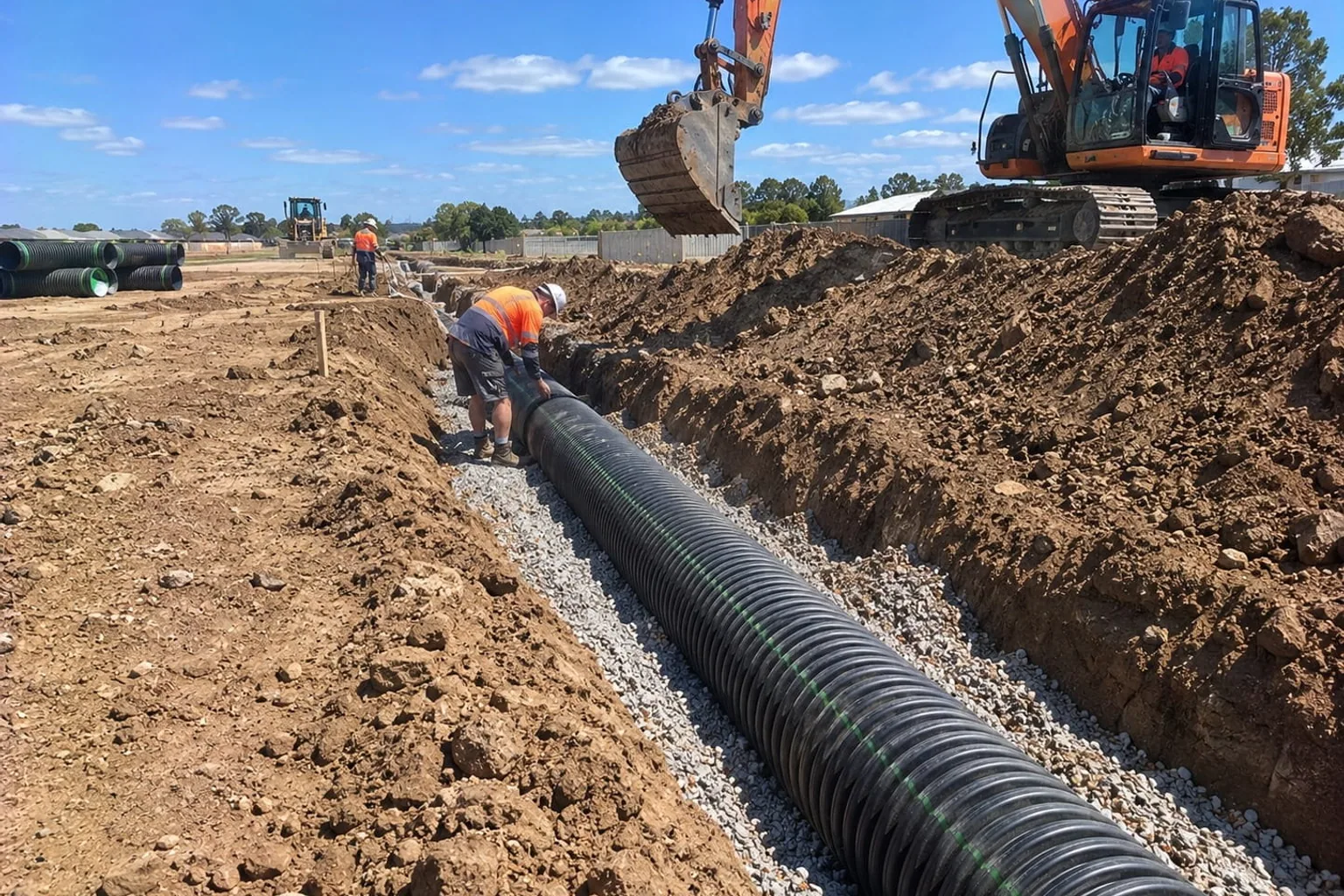
AG Pipe Drainage Installation
Trenches dug and AG pipe laid to draw groundwater away from retaining walls, garden beds and buildings before it causes trouble.
Planned properly. Finished tidy.
Wet yards, soggy paddocks and damp retaining walls often come down to poor subsurface drainage. We offer ag pipe drainage installation in Auckland to collect and redirect groundwater away from problem areas.
Our team excavates trenches to the correct grade, lays slotted pipe with quality drainage aggregate and filter fabric, and connects the system to a suitable outlet. This approach is ideal for behind retaining walls, around foundations, under lawns, along driveways and across rural land.
A properly installed system reduces moisture damage, prevents pooling and extends the life of surrounding structures. With experienced operators, tidy workmanship and transparent pricing, we deliver lasting results. Call us today for a free quote and fix your drainage problems for good.
AG pipe goes by a few names around the country, including agricultural pipe, novaflo, drain coil and AG line, but it is all the same thing: a slotted, ribbed pipe made from high-density polyethylene. It sits in a trench under the ground, wrapped in drainage metal or coarse sand, and picks up groundwater as it soaks through the soil around it. Those ribs let the pipe bend with the lie of the land, so it can follow a curved run without a rigid fitting at every turn.
Groundwater gets in through the slots in the pipe wall, runs along the inside and leaves at an outlet, which is normally a stormwater sump, a soakage pit or an open outlet at the low point of the section. The metal packed around the pipe acts as a filter at the same time, holding back fine clay and silt from the slots while letting the water move through. On Auckland’s heavy clay that filter layer matters, because clay fines will choke a bare pipe quickly.
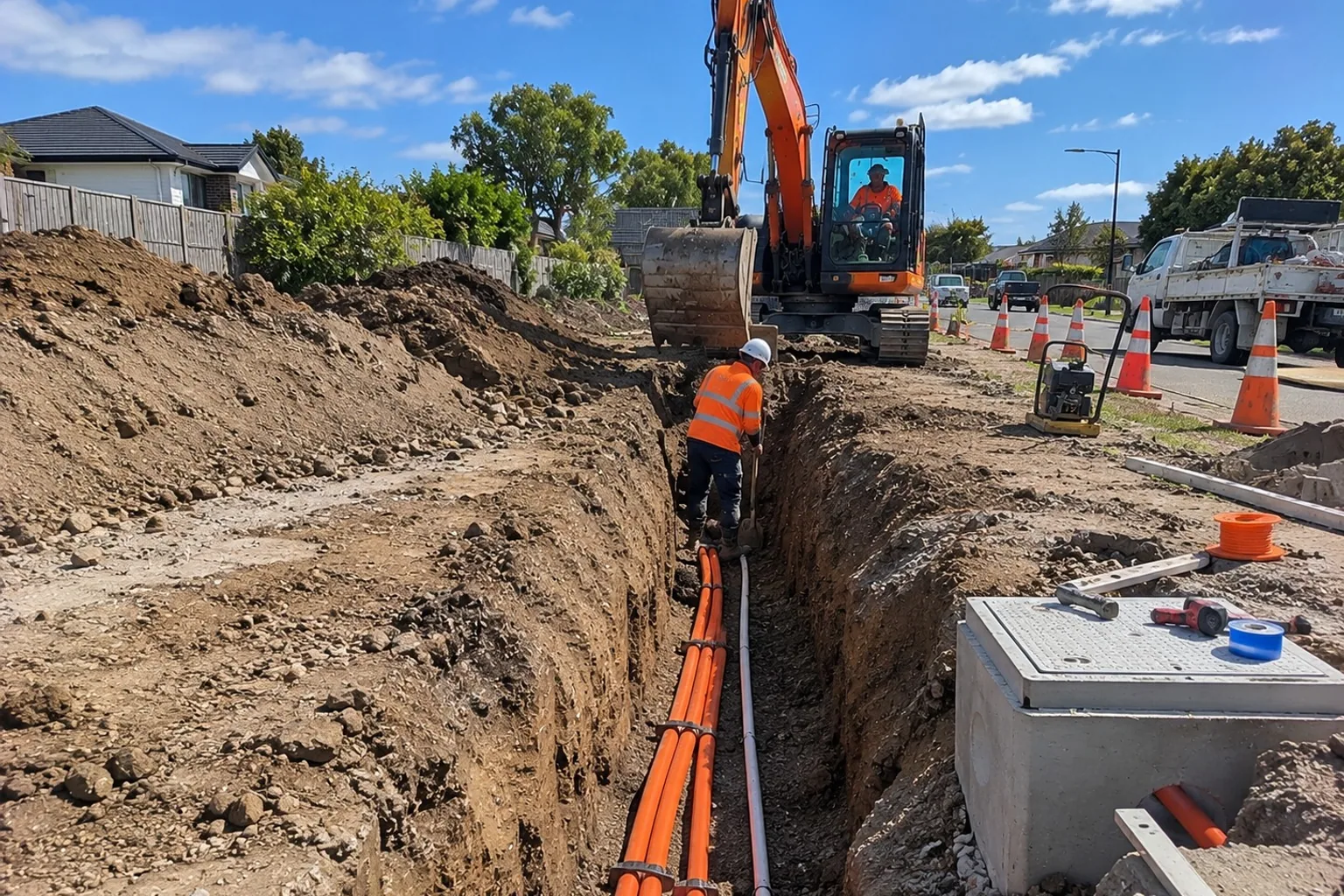
Drainage behind retaining walls, under garden beds and around foundations, plus French drains and moisture control beneath suspended floors.
Draining boggy paddocks, carrying dam overflow away, and keeping stock yards and races from turning to mud.
Subsoil drains under road pavements, toe drains along embankments, sports field drainage, and dewatering on construction sites.
Most AG pipe on the New Zealand market is manufactured to AS/NZS 2439.1, which sets the requirements for slotted and unslotted polyethylene drainage pipe. Where the pipe is going into a council or engineered job, check whether the specification asks for Class 400 (SN8) or Class 1000 (SN20), as the right one depends on the loads the pipe will carry. If the work is close to a stream or another sensitive environment, it pays to read Auckland Council’s guidance on stormwater, erosion and sediment control before anyone starts digging.
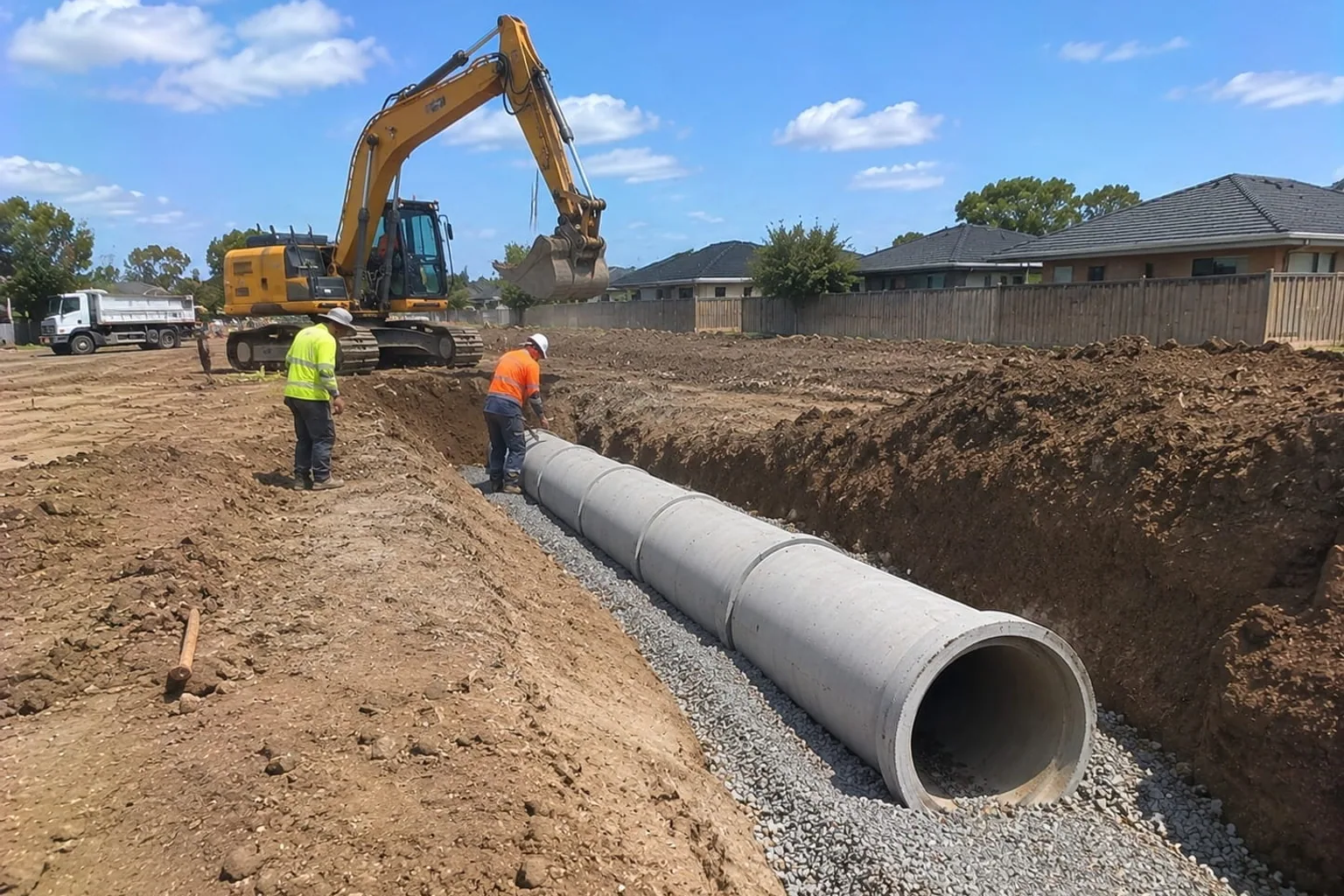
We check groundwater levels and how wet the soil stays before installing, so the AG pipe goes in at the right spot and depth to deal with subsurface water.
The pipe is placed at a depth and gradient that captures groundwater and carries it away from foundations, walls and garden beds.
We use quality slotted pipe and fittings suited to your drainage needs, so water is collected effectively without the pipe clogging early.
The system is connected to a suitable outlet, such as the stormwater line, a soakage system or another approved discharge point.
We install with as little disruption to existing landscaping as possible, and put the surface back close to how we found it.
Once it’s working, your AG drain keeps subsurface water under control, helping prevent waterlogging and protecting structures and plantings.
Often booked alongside Stormwater Drainage, Drainage Solutions, Soakage Installation, Sump Pit Installation and other prep work where access, levels and a tidy handover count. It all sits within our drainage and water management work.
We pick the machine and attachments only once we have looked at access, reach, the ground, how much material is moving and the finish you need.
What applies depends on Auckland Council, your property and the job. Any approvals, beforeUdig locating and site controls need confirming before we start.
What drives the cost
Every site is different. Here is what makes the biggest difference to an AG pipe drainage installation quote.
More metres of AG pipe, or a deeper trench to catch the water, means extra digging, gravel and pipe, so the cost climbs with the run.
Sticky clay or a layer of rock changes how easy the trench is to dig and how much preparation the pipe needs before it goes in.
The further the water has to travel to a proper outlet, and the more awkward that connection is, the more time and material go in.
Where the trench runs through lawn or established gardens, reinstating them afterwards adds to the overall cost of the job.
What we bring
Installing AG drainage takes digging, pipe supply and connection work, and we manage the whole process ourselves. Instead of hiring one contractor to dig and another to lay the drain, our crew does everything from the first trench to the final connection. You end up with a properly working drain installed efficiently by one experienced crew, with no waiting on a second company to finish the job.
What is covered
Once subsoil drainage is buried you cannot see it, so the details need to be in writing first.
Why work with us
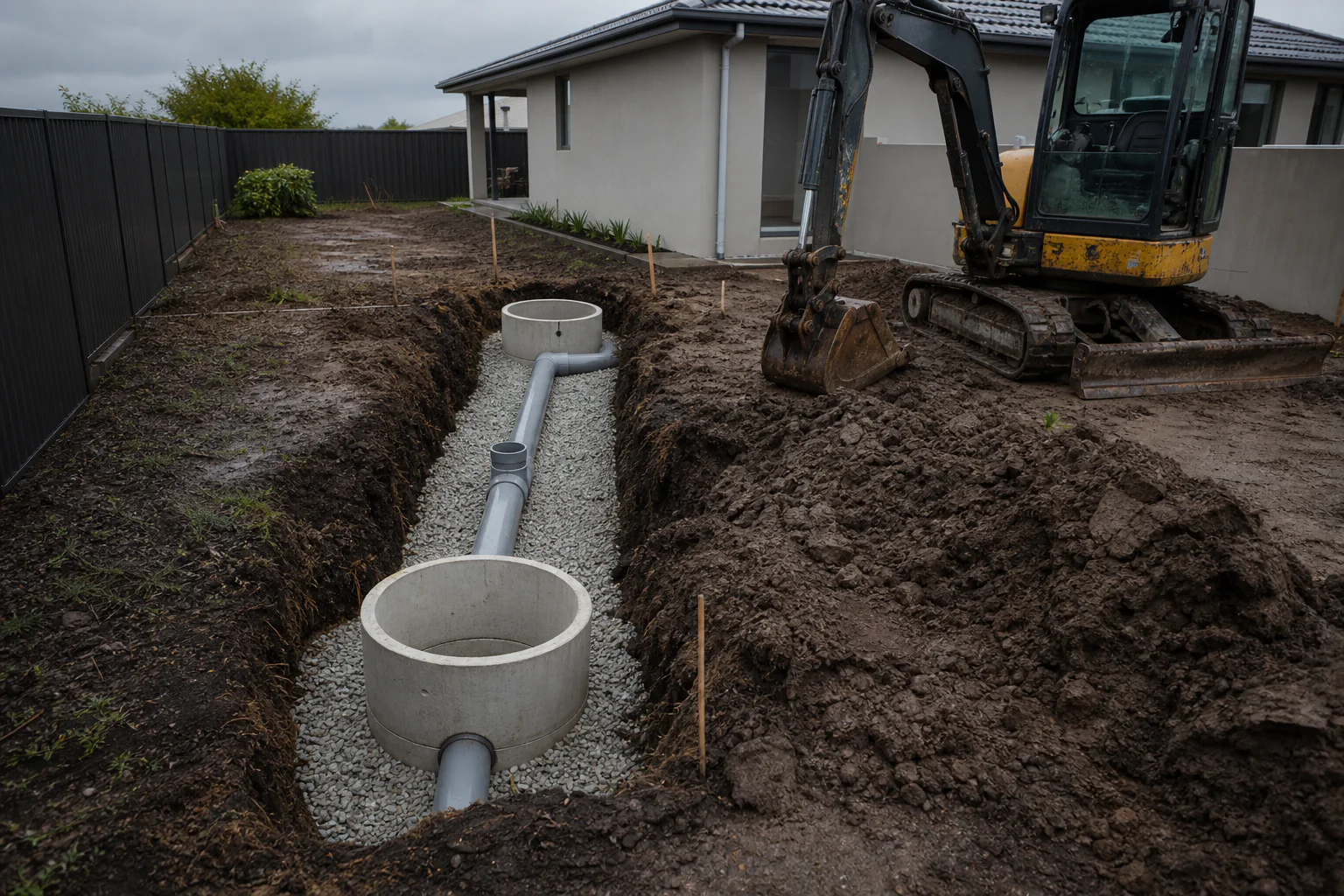
Groundwater problems often stay hidden until they’ve already done damage, which is why a properly installed AG drain matters on so many Auckland sections. We look at how wet the ground sits and what the soil is like before deciding where the pipe should go and how deep, so moisture is drawn away from foundations and garden beds. Quality perforated pipe is laid at the right depth and fall for your situation, collecting water effectively without silting up early.
The drain is connected to a suitable outlet, whether that’s the stormwater system or another approved discharge point, and we install it carefully to keep disturbance to your landscaping to a minimum. With the same crew handling the digging and the installation, your project goes from open trench to working drain without delays. We’ve installed AG drainage on many Auckland properties dealing with ongoing damp, and we bring the practical know-how this often-overlooked fix needs.
Getting the site ready
Subsoil drains only work where the water actually collects. These four make sure that’s where they go.
The digging gear needs a clear run along the planned trench. Shift anything that would get in the way of laying the AG pipe in a straight line.
Flag any services near the drain run so the trenching doesn’t damage existing pipes or cables along the way.
Mark the spots that stay waterlogged or damp. In heavy clay this matters, because the AG pipe has to target exactly where water is sitting.
Have details of where the collected water will go, whether into stormwater, a soakage system or another approved outlet.
Where we work
AG drainage is most needed in the damp Waitākere foothills and on lifestyle blocks around Kumeū and Riverhead, where wet ground and a high water table cause ongoing trouble.
We put in AG drains across the whole Auckland region.
Common questions
We work right across metropolitan Auckland, and regional or rural jobs can be looked at case by case. Include your suburb when you ask for a quote and we’ll confirm whether we can help.
Not always. Simpler jobs can often be priced from plans and photos, but sites with awkward access or a complicated scope are usually worth a visit first.
It depends on Auckland Council’s rules, your property and the scope of the job. Check what applies before anything starts—we can help you work out what to ask the council.
We cover residential, rural, commercial and civil work. Whether a particular job suits us comes down to access, programme, the plant needed and the confirmed scope.