Assessing the Real Risk
We look at your site’s slope, soil and exposure to the weather before recommending erosion controls that match the actual risk.
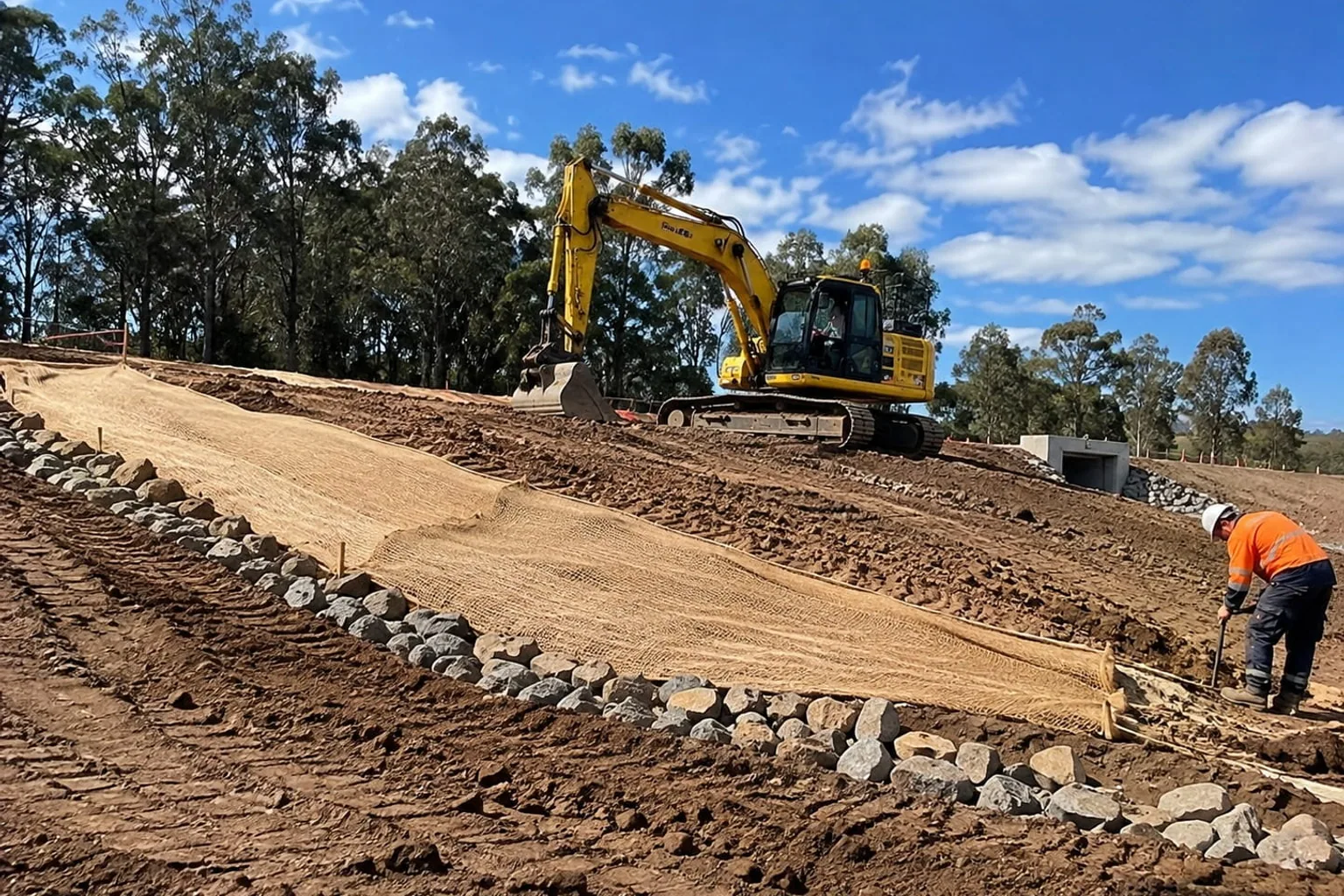
Erosion Control
Shaping the ground and setting up site measures to control erosion, manage sediment and keep access stable.
Planned properly. Finished tidy.
Unchecked erosion damages land, washes soil into drains and waterways, and can lead to costly repairs and compliance issues. We provide erosion control in Auckland for building sites, rural properties, slopes, drainage lines and commercial developments.
Our team installs sediment barriers, stabilises exposed soil, shapes batters, builds diversion drains and uses suitable materials to slow water flow and protect the surface. We tailor solutions to your site conditions, rainfall exposure and project stage, helping you meet environmental requirements and protect neighbouring properties.
Acting early prevents bigger problems later, and our experienced operators complete work efficiently with minimal disruption. Contact us today for practical advice, reliable workmanship and a free, no-obligation quote.
We look at your site’s slope, soil and exposure to the weather before recommending erosion controls that match the actual risk.
Depending on what’s needed, we install silt fences, sediment traps, stabilised entrances and shaped batters to keep soil where it belongs.
Erosion control work follows the relevant council and environmental standards, which is especially important on building and earthworks sites.
We can advise on checking and maintaining your erosion controls through the project, so they keep working as the site changes.
Good erosion control stops sediment washing into streams, stormwater and neighbouring properties, protecting the wider environment while you build.
With controls in place, your site is much better protected against soil loss and sediment runoff, especially during and after heavy rain.
Often booked alongside Residential Earthworks, Commercial Earthworks, Civil Earthworks and other prep work where access, levels and a tidy handover count. It all sits within our commercial and compliance work.
We pick the machine and attachments only once we have looked at access, reach, the ground, how much material is moving and the finish you need.
What applies depends on Auckland Council, your property and the job. Any approvals, beforeUdig locating and site controls need confirming before we start.
What drives the cost
Every site is different. Here is what makes the biggest difference to an erosion control quote.
Bigger sites, steeper slopes and loose or bare soil carry more risk of washing away, so they need more control measures in place.
A simple silt fence costs far less than a full setup of batter stabilisation, sediment ponds and diversion drains, so the method chosen matters.
Controls that have to stay in place and be maintained over a long build cost more overall than short-term protection for a quick job.
Where the project has specific environmental conditions to meet, the erosion controls usually need to be more thorough, which adds to the cost.
What we bring
Erosion control usually has to be planned alongside the wider earthworks, and we have the gear and experience to manage both together. Rather than bringing in a separate erosion control specialist once the main earthworks are finished, our crew builds protection measures into the overall project. Your erosion control is properly integrated from day one instead of being an afterthought left to another company.
What is covered
Erosion control gets tested by the first big downpour, and this scope is written with that in mind.
Why work with us
Erosion control works when it’s based on the real risk on your site, not a standard measure applied regardless of conditions. We assess the slope, soil type and exposure before recommending controls that suit that risk, whether it’s silt fencing, sediment traps or shaped and stabilised batters. All work meets the relevant council and environmental standards, which is especially important on construction and earthworks sites where compliance is closely watched.
We can advise on checking and maintaining the controls throughout your project so they keep working as site conditions change. Good erosion control cuts the amount of sediment washing into streams, the harbour and neighbouring properties, protecting both your compliance record and the wider environment. Having put erosion control in place on a range of Auckland construction and earthworks sites, we bring a practical, site-specific approach that protects your project from erosion-related compliance problems.
Getting the site ready
Sediment controls need to be in place before the rain arrives, not after. These four decide what goes where.
Make sure the areas needing controls can be reached for installation, especially slopes and boundaries where runoff tends to escape.
Point out where water flows or ponds during heavy rain. On Auckland clay that tells us which controls will work best on your site.
Tell us if controls must be installed before any other earthworks start, which is especially important on jobs with consent conditions.
Raise any worries about runoff or silt reaching neighbouring properties, so the controls protect the surrounding area as well as your site.
Where we work
Erosion control matters most on the steep slopes of the Waitākere foothills and on active building sites in the new subdivisions.
We set up erosion control on sites across Auckland.
Common questions
We work right across metropolitan Auckland, and regional or rural jobs can be looked at case by case. Include your suburb when you ask for a quote and we’ll confirm whether we can help.
Not always. Simpler jobs can often be priced from plans and photos, but sites with awkward access or a complicated scope are usually worth a visit first.
It depends on Auckland Council’s rules, your property and the scope of the job. Check what applies before anything starts—we can help you work out what to ask the council.
We cover residential, rural, commercial and civil work. Whether a particular job suits us comes down to access, programme, the plant needed and the confirmed scope.