Checking the Site Will Hold Water
We look at the soil, the fall of the land and the catchment above it first, so the dam is sited and designed to actually fill and hold water.
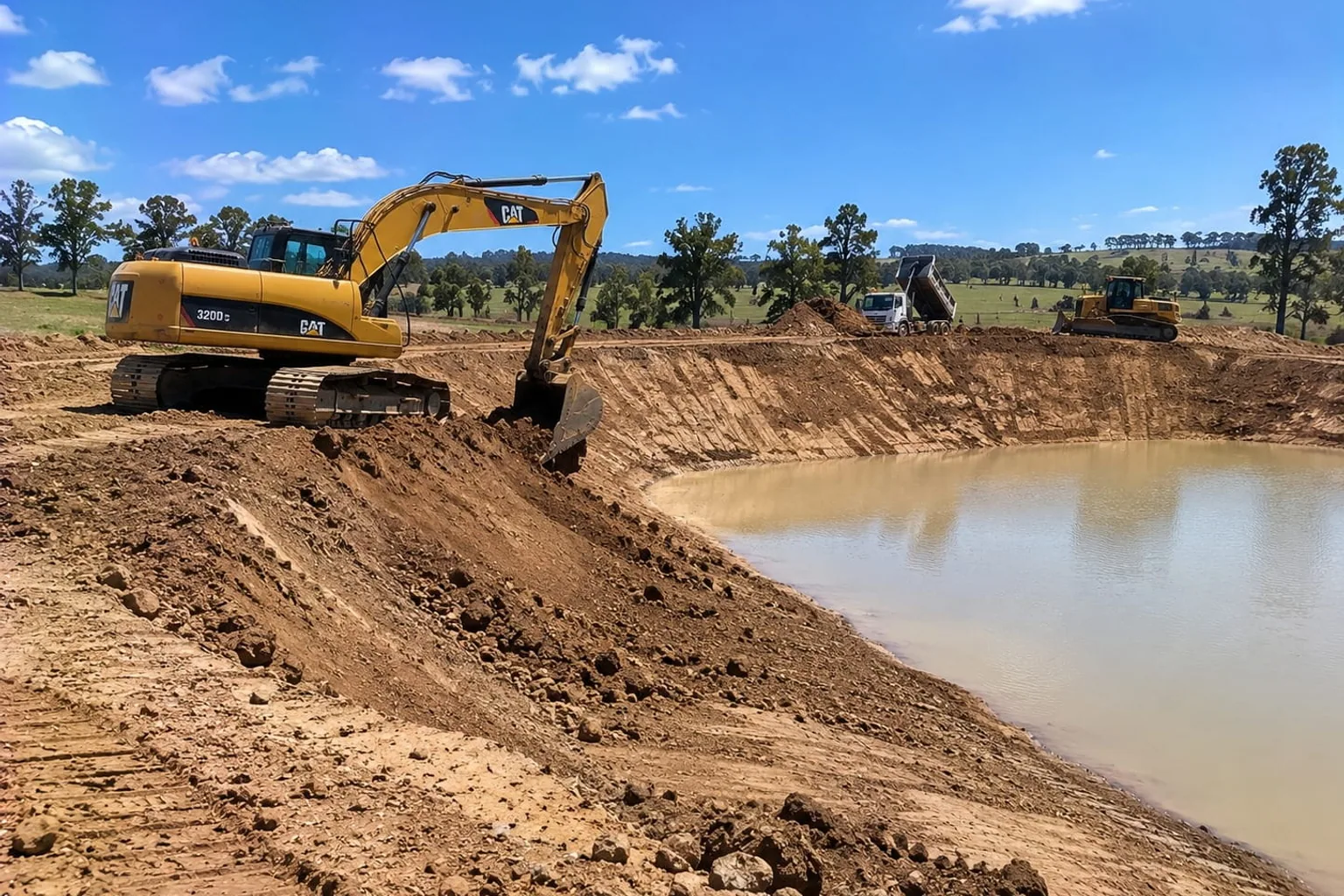
Dam Construction
Farm and lifestyle-block dams dug and shaped to suit the soil, catchment, access and stable batter slopes.
Planned properly. Finished tidy.
A well-built dam provides dependable water storage for livestock, irrigation, firefighting and property use. We offer dam construction and dam digging in Auckland and surrounding rural areas, including site assessment, excavation, shaping, compaction and embankment construction.
Our operators work carefully to create stable walls, appropriate depths and sound spillways so your dam performs reliably through all seasons. We also provide dam clean-outs, enlargements and repairs for existing water storage.
Understanding soil type, water flow and catchment is essential, and we apply that experience to every project. With powerful excavators and skilled operators, we complete work efficiently and safely. Contact us today for honest advice, clear pricing and a free, no-obligation quote on your next dam project.
We look at the soil, the fall of the land and the catchment above it first, so the dam is sited and designed to actually fill and hold water.
We excavate and shape the dam to the depth, batter slopes and size your water storage calls for, using machinery suited to the scale of the job.
The floor and walls are compacted carefully, because poor compaction lets water seep away. It’s a step we don’t rush at any stage.
We allow for a spillway and surrounding drainage, so heavy rain doesn’t erode the banks or flood the area once the dam is full.
Excavated soil is often used to build up the embankment or for landscaping nearby, putting the spoil from the dig to practical use.
When we finish, the dam is shaped, compacted and ready to collect water for stock, irrigation or general storage on your property.
Often booked alongside Excavation, Bulk Excavation, Footing Excavation, Basement Excavation and other prep work where access, levels and a tidy handover count. It all sits within our excavation sub-services work.
We pick the machine and attachments only once we have looked at access, reach, the ground, how much material is moving and the finish you need.
What applies depends on Auckland Council, your property and the job. Any approvals, beforeUdig locating and site controls need confirming before we start.
What drives the cost
Every site is different. Here is what makes the biggest difference to a dam construction quote.
A larger dam means more earth dug, shaped and moved into the wall, so the capacity you want sets much of the machine time and cost.
Good clay seals well, but more porous ground can need extra compaction or a liner to hold water, which adds to the build.
Dams are often in back paddocks. Poor tracks or soft ground can limit what machinery can get there and add time to the project.
A properly built overflow and drainage around the dam keeps it safe in heavy rain, but it’s additional work and adds to the price.
What we bring
Building a dam takes excavation, shaping and compaction, and we already have the machines for every stage. Rather than coordinating a separate digging contractor and a construction crew, we take your dam from the first dig through to final shaping and compaction ourselves. You get a properly built dam from one accountable crew, without the delays of waiting for multiple companies to line up their calendars.
What is covered
Whether a dam holds water comes down to how it was built, not its size. This is our share of that.
Why work with us
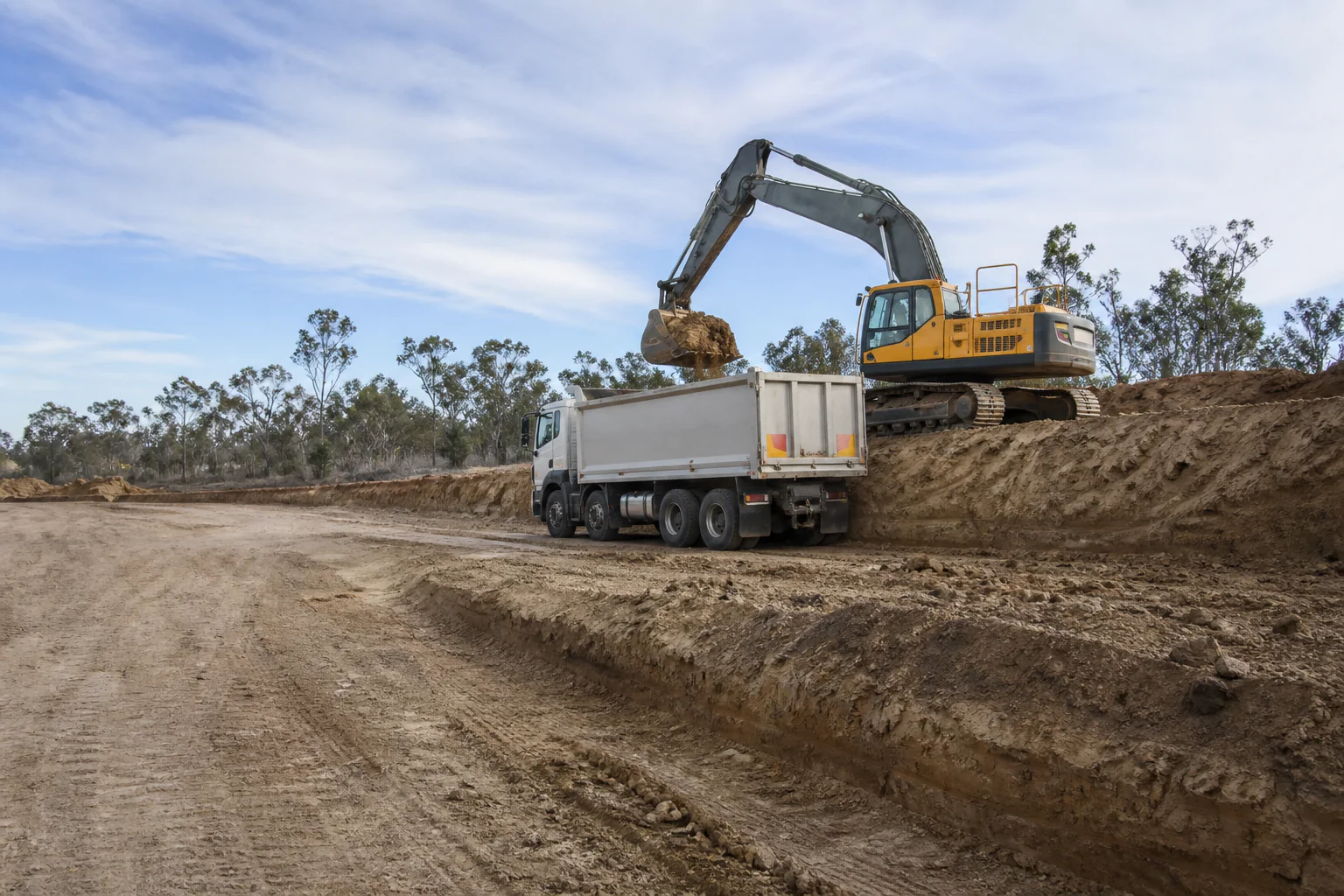
A dam that leaks or won’t hold water isn’t just frustrating; it’s money spent for nothing. Before we start, we look closely at the soil, the slope and the catchment feeding the site, so the dam’s position and shape suit the job it’s meant to do. We then dig and shape it to the right depth and capacity, compacting thoroughly as we build so that seepage losses are kept to a minimum.
Spillways and the drainage around the dam are planned from the start, which reduces the risk of scouring or flooding once heavy rain begins filling it. Dug material is often put to good use in surrounding banks or landscaping instead of being carted off. We’ve built dams on rural and lifestyle properties around Auckland, and we know what keeps a dam working well over many years, not just looking tidy on the day it’s finished. That practical focus on results is what our dam work is built on.
Getting the site ready
A dam gets shaped once, for water that only turns up later. These four guide where it sits and how large it is.
The machine has to reach the chosen spot without obstruction. Larger excavators often need more room than a typical farm track gives them.
Point out natural gullies and where water runs across the land in wet months. That helps confirm the dam is placed where it will catch and hold water.
Stock water, irrigation or general storage each call for a different size. Knowing the intended use means the dam is built to suit what you actually need.
Depending on its size and location, a dam may need consent. Check this with Auckland Council ahead of time so the build isn’t delayed when it’s ready to go.
Where we work
Dams are mostly a rural job, built on lifestyle blocks and farms in the north-west and south-east that need water storage for stock or irrigation.
We build dams on rural and lifestyle properties throughout the greater Auckland area.
Common questions
We work right across metropolitan Auckland, and regional or rural jobs can be looked at case by case. Include your suburb when you ask for a quote and we’ll confirm whether we can help.
Not always. Simpler jobs can often be priced from plans and photos, but sites with awkward access or a complicated scope are usually worth a visit first.
It depends on Auckland Council’s rules, your property and the scope of the job. Check what applies before anything starts—we can help you work out what to ask the council.
We cover residential, rural, commercial and civil work. Whether a particular job suits us comes down to access, programme, the plant needed and the confirmed scope.