Studying How Water Flows
We look at how water moves across your site and what drainage is needed, so the culvert is the right size and in the right place.
Culvert Installation
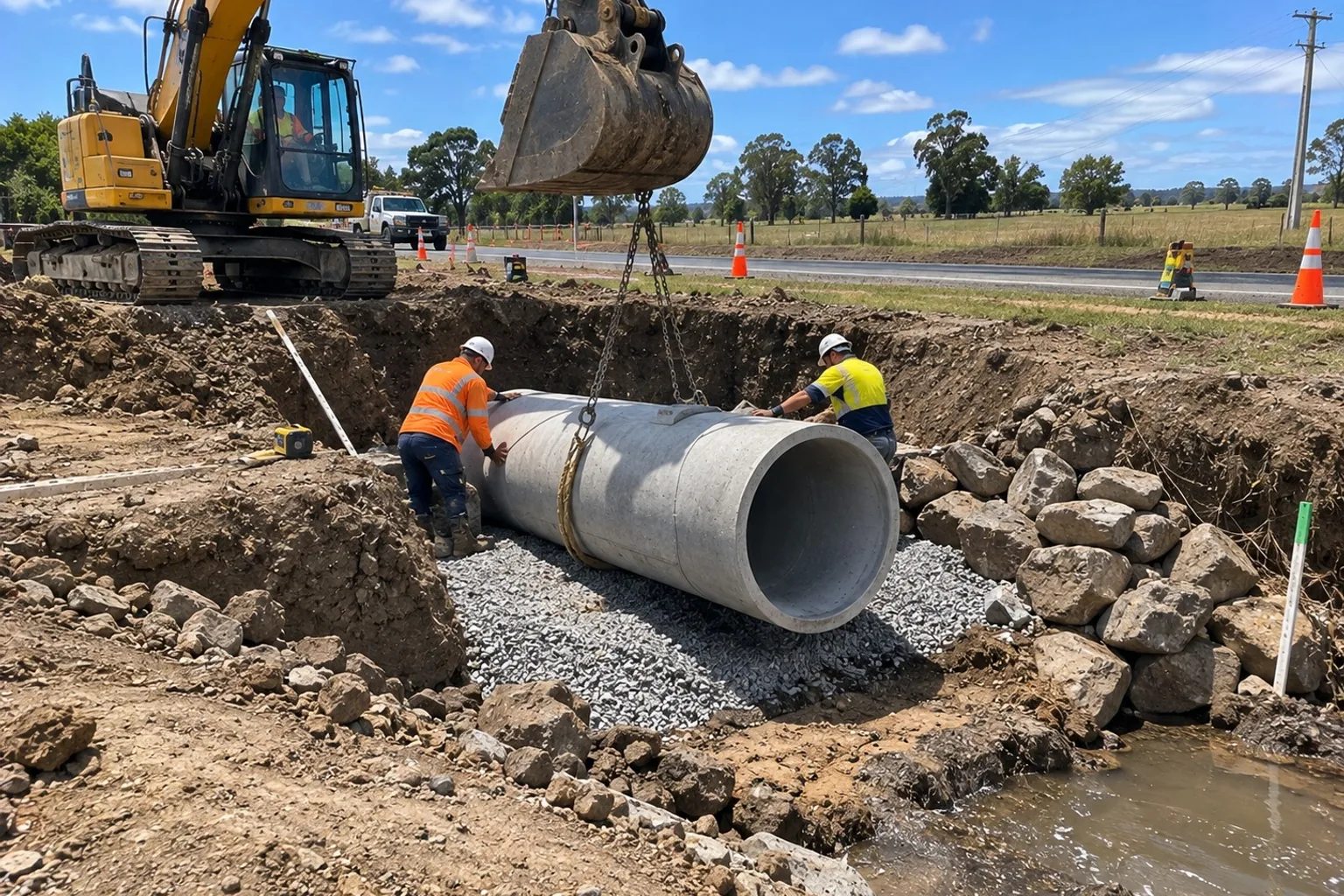
Culverts dug in, bedded and readied for backfill on rural accessways, drainage crossings and civil jobs.
Planned properly. Finished tidy.
Properly installed culverts keep water moving under driveways, roads and access points, protecting your property from flooding and erosion. We provide culvert installation in Auckland for residential, rural and commercial sites, including excavation, bedding, pipe placement, backfilling and compaction.
Our team checks levels, flow direction and loading requirements to ensure the culvert performs reliably in heavy rain and under vehicle traffic. We work with concrete pipes, corrugated pipes and precast products, and we can finish the surrounding area with gravel, road base or other materials as required.
With experienced operators and the right machinery, we complete jobs efficiently and with minimal disruption. Get honest advice, clear pricing and quality workmanship by contacting us today for a free quote.
We look at how water moves across your site and what drainage is needed, so the culvert is the right size and in the right place.
The pipe size and material are chosen for the volume of water expected, avoiding an undersized culvert that floods or scours in heavy rain.
We excavate to the right depth and lay proper bedding, so the culvert sits true and does its job once it’s in place.
If the culvert connects to public drainage or affects road access, we make sure it’s installed to the relevant Auckland Council requirements.
We add erosion protection at both ends where needed, reducing the risk of fast-moving water scouring the surrounding ground.
Installed and bedded properly, your culvert will carry water reliably for years, with less chance of blockages or failure.
Often booked alongside Sewer Line Excavation, Trenching, Trenching for Power/Fibre/Cabling, Road Base Preparation and other prep work where access, levels and a tidy handover count. It all sits within our civil and utility works work.
We pick the machine and attachments only once we have looked at access, reach, the ground, how much material is moving and the finish you need.
What applies depends on Auckland Council, your property and the job. Any approvals, beforeUdig locating and site controls need confirming before we start.
What drives the cost
Every site is different. Here is what makes the biggest difference to a culvert installation quote.
Larger pipes and heavier-duty materials cost more to buy, but getting the size right is what stops the culvert overtopping in a big storm.
A culvert that needs to sit deep under a track or driveway takes more digging and labour, which adds to the installed cost.
Soft banks or tight access to the stream or drain can mean smaller machinery and extra handling, stretching out the time on site.
Rock armouring or other scour protection at the inlet and outlet takes extra material and work, but it keeps the culvert from washing out.
What we bring
Putting in a culvert takes digging, material supply and construction work, and we look after all three ourselves. Instead of you coordinating separate excavation and drainage contractors, our crew runs the full installation from the first dig through to final placement and erosion protection. One experienced crew oversees your drainage infrastructure, with everything needed already on hand rather than waiting on several companies.
What is covered
Culverts must carry water under them and weight on top, and both of those shape the quote.
Why work with us
A culvert that’s too small or in the wrong place can cause the very flooding and erosion it was meant to stop. We look at how water moves across the site and what drainage is needed before installing, so the culvert is sized and positioned for your conditions rather than guessed at. We dig to the correct depth and lay suitable bedding, so the culvert sits properly and works as it should once it’s in.
Where a culvert connects to public drainage or affects road access, we build to the relevant council requirements and raise it early if an approval has to be in place before work starts. Inlets and outlets are protected against erosion, reducing the chance of scouring where water flow is concentrated. Having installed culverts on rural and urban Auckland properties, we understand what keeps these systems working reliably for years, not just through their first inspection.
Getting the site ready
A culvert is laid once, on a fall that has to be right. These four are worth checking before we start.
Clear the area for the digger and for material drop-off. Culverts often go in under driveways or entry points, so those routes need keeping clear.
Point out the direction water naturally flows across the site. That confirms the culvert sits where it will carry runoff properly once it’s in.
Keep any council or engineering specs for the culvert size handy, as the size changes both how deep we dig and what materials are needed.
Culverts that change drainage or road access may need Auckland Council approval. Check early so the work isn’t held up when it’s ready to start.
Where we work
Culverts are mainly needed on rural and lifestyle properties dealing with natural water flow, and in new subdivisions where roads are being built.
Culvert installation is available anywhere in the Auckland region.
Common questions
We work right across metropolitan Auckland, and regional or rural jobs can be looked at case by case. Include your suburb when you ask for a quote and we’ll confirm whether we can help.
Not always. Simpler jobs can often be priced from plans and photos, but sites with awkward access or a complicated scope are usually worth a visit first.
It depends on Auckland Council’s rules, your property and the scope of the job. Check what applies before anything starts—we can help you work out what to ask the council.
We cover residential, rural, commercial and civil work. Whether a particular job suits us comes down to access, programme, the plant needed and the confirmed scope.