Testing the Subgrade
We look at the existing soil and subgrade before starting, so we know what preparation is needed to support a stable road base that lasts.
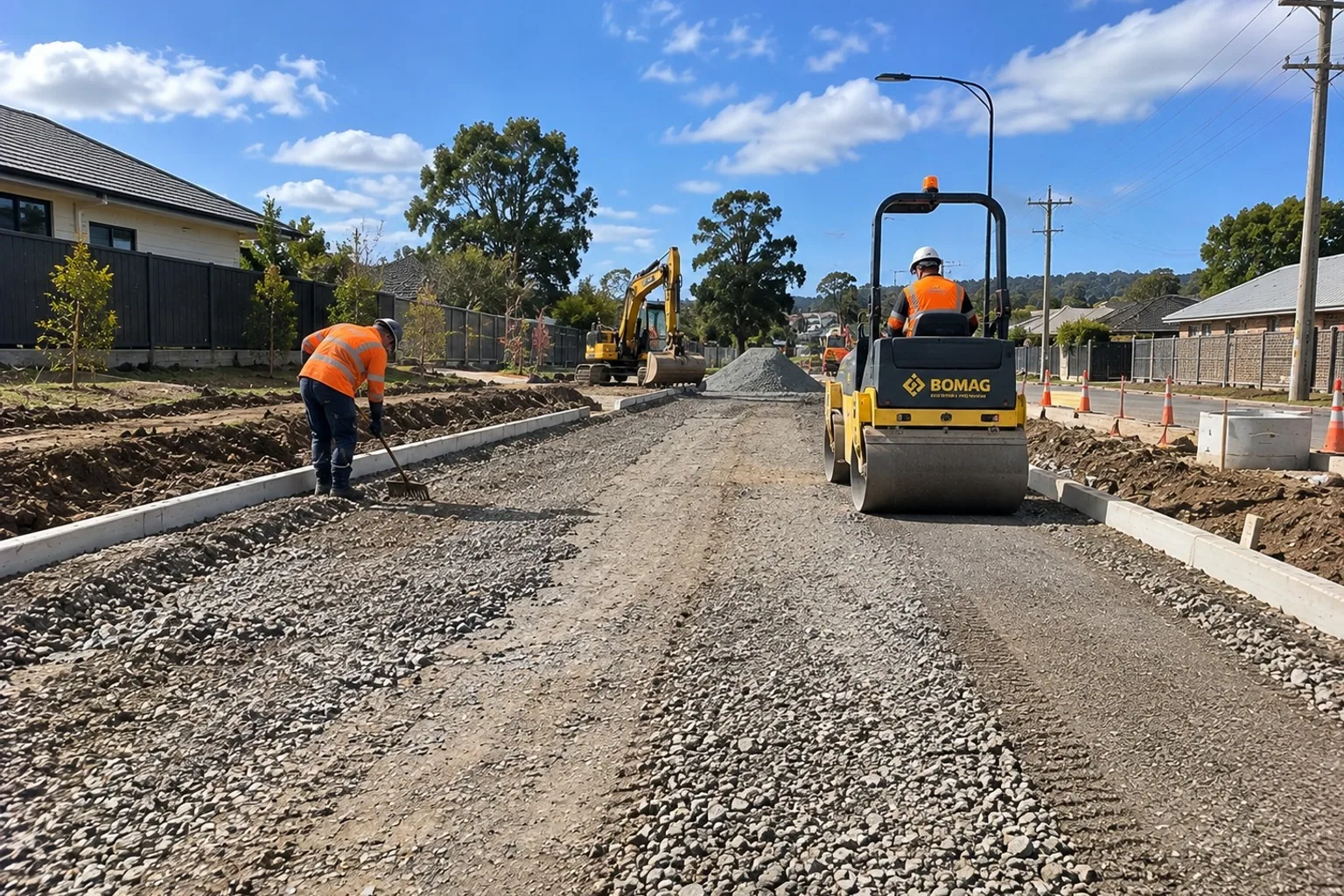
Road Base Preparation
Subgrade shaped, basecourse placed and levels graded for roads, accessways, driveways and hardstands.
Planned properly. Finished tidy.
A solid road base is the foundation of every durable driveway, access track, car park and hardstand. We offer road base preparation in Auckland, including excavation, supply, spreading, shaping and compaction of quality base material.
Our operators work to the correct levels and thicknesses to ensure strong load-bearing capacity and proper drainage, which helps prevent potholes, rutting and premature failure. We prepare surfaces for concrete, asphalt, pavers or exposed gravel finishes, and we tailor the base to suit expected traffic and soil conditions.
Using modern compaction equipment and careful grading, we deliver a firm, even result that lasts. Whether your project is residential, rural or commercial, you can count on dependable service and clear communication. Request a free, no-obligation quote today.
We look at the existing soil and subgrade before starting, so we know what preparation is needed to support a stable road base that lasts.
We excavate and grade to the required profile, setting the falls for drainage and creating an even surface for the basecourse to go on.
We supply aggregate suited to the expected traffic and site conditions, so the base holds up under regular vehicle use.
Road base only performs if it’s compacted properly. We compact to spec to reduce rutting, sinking and surface failure once the road is in use.
Falls and, where needed, subsoil drains are built in during preparation, keeping water out of the base and protecting it over time.
Once we’re done, the base is compacted and ready for asphalt, chip seal or concrete, with no further groundwork required.
Often booked alongside Sewer Line Excavation, Trenching, Trenching for Power/Fibre/Cabling, Culvert Installation and other prep work where access, levels and a tidy handover count. It all sits within our civil and utility works work.
We pick the machine and attachments only once we have looked at access, reach, the ground, how much material is moving and the finish you need.
What applies depends on Auckland Council, your property and the job. Any approvals, beforeUdig locating and site controls need confirming before we start.
What drives the cost
Every site is different. Here is what makes the biggest difference to a road base preparation quote.
A long access road or large hardstand needs more base material, more compaction passes and more labour, so the total area drives the cost.
Soft or wet clay below the base may need undercutting or stabilising before any metal goes down, which adds time and material.
Roads carrying trucks need a thicker, stronger base than light vehicle access. The type and volume of metal affect supply and delivery costs.
Shaping the road with proper camber and adding side drains or subsoils keeps the base sound, but it adds scope to the preparation work.
What we bring
Preparing a road base involves digging, supplying material and compacting it, and every part of that is done by our own crew. Rather than you finding separate contractors for the excavation, the aggregate and the compaction gear, we bring everything needed to prepare the base properly in one process. That makes for a more efficient programme and a single accountable crew looking after the groundwork before sealing or surfacing starts.
What is covered
Basecourse prep is as much about compaction as shape, and testing is where our part hands over.
Why work with us
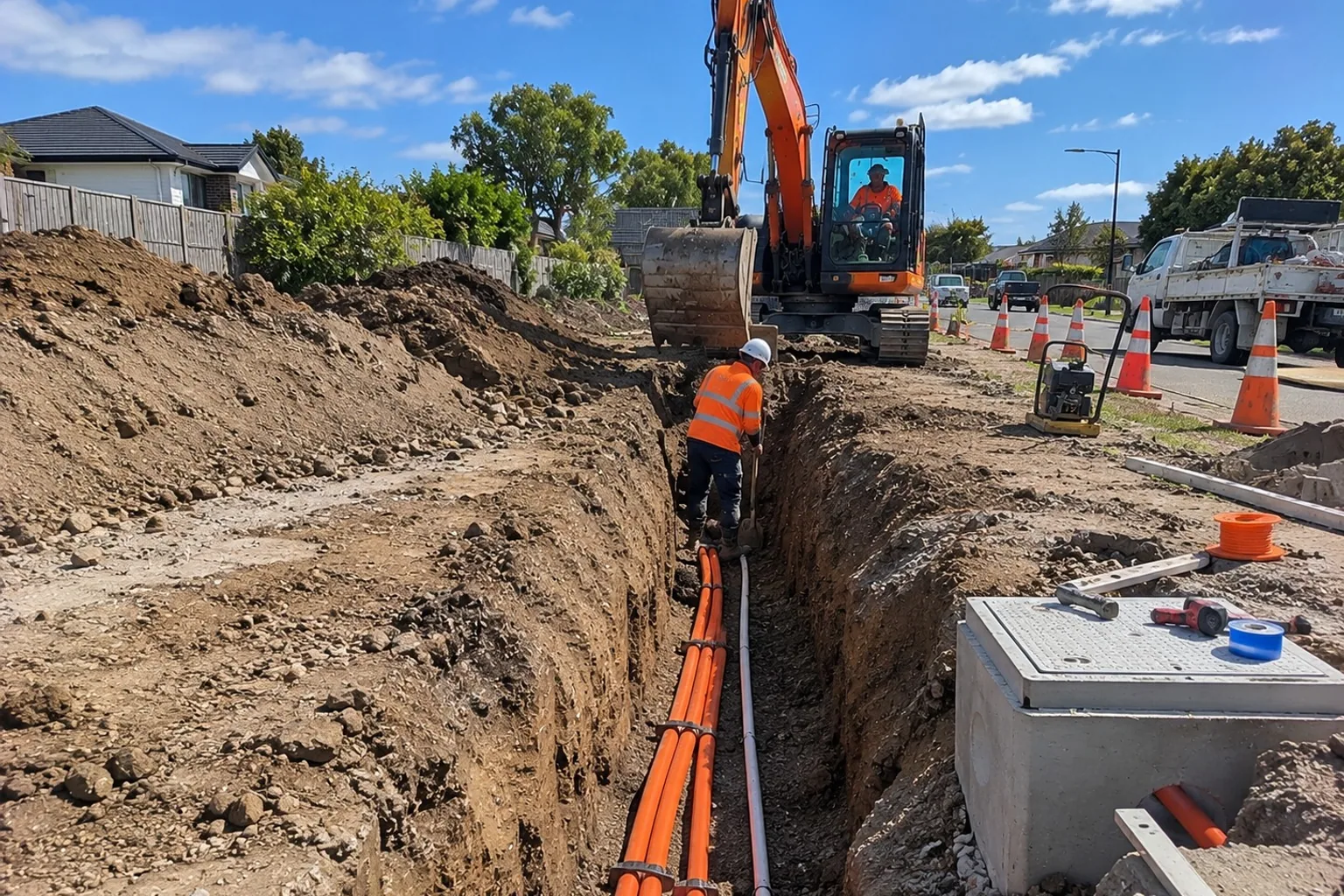
The road base decides whether the surface above it copes with years of traffic or breaks up after a few seasons. We look at the existing soil and subgrade before starting, then excavate and shape to the required profile with drainage falls built into every job. Base material is chosen to suit the expected traffic loads, supplied by us and compacted thoroughly to specification, reducing the risk of rutting or surface failure once vehicles are using it.
Drainage is built in properly, including subsoil drains where they’re needed, to protect the base over the long term. When we’re done, the base is ready for asphalt, chip seal or concrete with no further groundwork required. We’ve prepared road base for subdivision roads, driveways and access tracks around Auckland, and we give this often-underrated stage the thoroughness it needs for lasting results.
Getting the site ready
Basecourse work runs without a break once it begins. These four keep the machines and trucks working in step.
Get vehicles, stored materials and obstacles off the full length of the base. The machines need a continuous, open run to work through efficiently.
Mark any services you know run under or alongside the base area. This matters especially on shared driveways and private roads.
Keep the engineering drawings on hand showing width, depth and basecourse material. The prep has to follow those specs closely.
Confirm dates with whoever is sealing or surfacing after us, so the base is finished and ready right when they’re booked to arrive.
Where we work
Road base preparation is very much a growth-area job, with new subdivision roads and driveways keeping us busy north and south of the city.
Private lanes and driveways in older parts of Auckland need a good base too, and we prepare those as well.
Common questions
We work right across metropolitan Auckland, and regional or rural jobs can be looked at case by case. Include your suburb when you ask for a quote and we’ll confirm whether we can help.
Not always. Simpler jobs can often be priced from plans and photos, but sites with awkward access or a complicated scope are usually worth a visit first.
It depends on Auckland Council’s rules, your property and the scope of the job. Check what applies before anything starts—we can help you work out what to ask the council.
We cover residential, rural, commercial and civil work. Whether a particular job suits us comes down to access, programme, the plant needed and the confirmed scope.