Testing How the Ground Drains
Clay soils absorb water slowly, so we assess how well your ground drains before sizing and siting the soakage unit, making sure it can cope with your runoff.
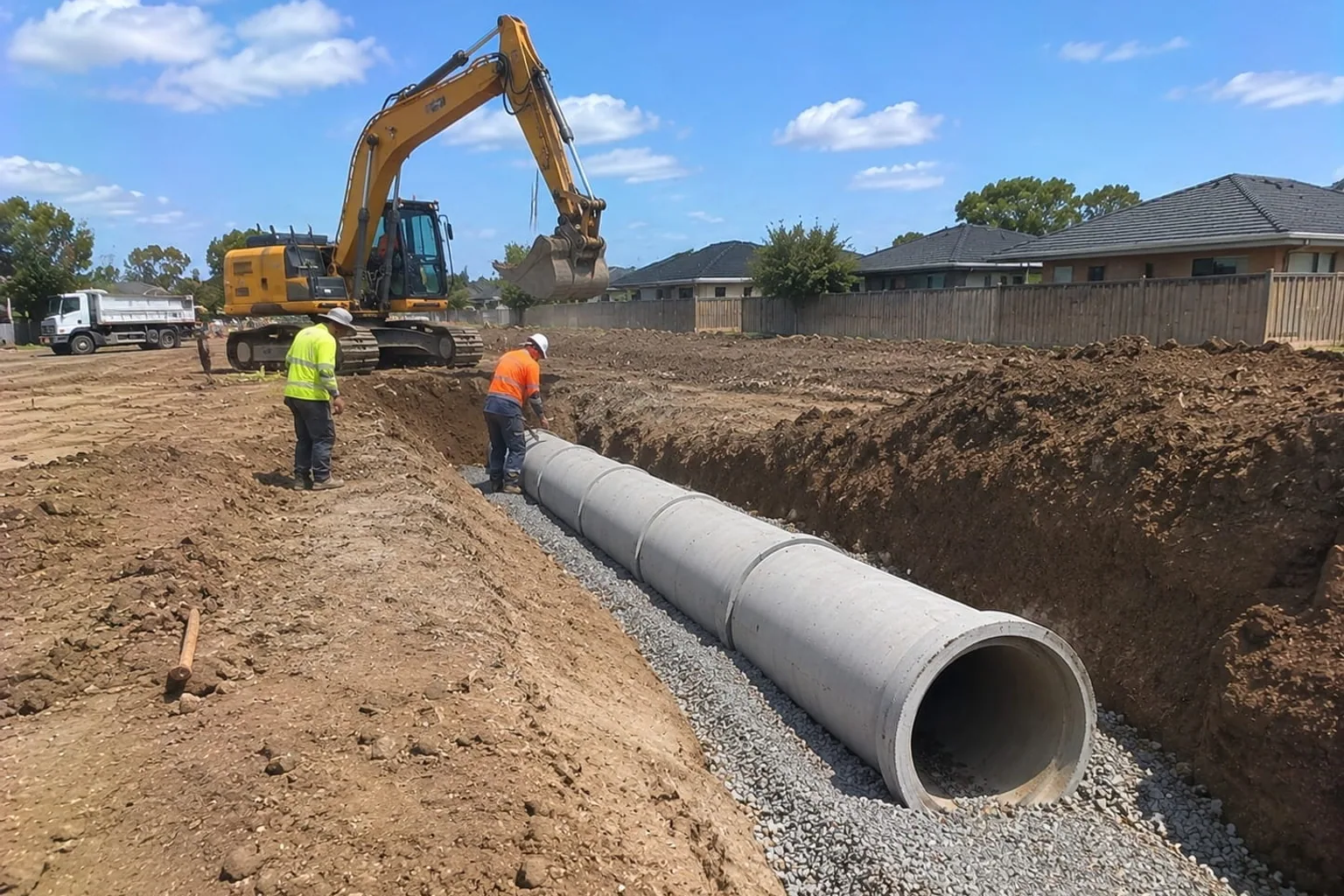
Soakage Installation
Soakage pits dug and installed with careful thought given to placement, pipe falls, access and making good afterwards.
Planned properly. Finished tidy.
Soakage pits are a vital part of stormwater management in Auckland, allowing rainwater to disperse safely into the ground rather than flooding your property. We provide soakage installation in Auckland for new homes, extensions, sheds and commercial buildings.
Our team excavates to the required depth, installs precast soakage pits with the correct surrounding aggregate, connects pipework and backfills neatly, ensuring the system meets local requirements. We assess soil conditions and site layout to determine the right size and location, helping avoid overflow and maintenance issues.
With modern machinery and experienced operators, installations are completed quickly and with minimal mess. Reliable service, honest pricing and quality workmanship come standard. Call us today for a free, no-obligation quote.
Clay soils absorb water slowly, so we assess how well your ground drains before sizing and siting the soakage unit, making sure it can cope with your runoff.
Capacity is worked out from your roof area and expected rainfall, so the system isn’t too small and overflowing every time a big storm comes through.
Each unit is dug in at the correct depth and a safe distance from the house and other structures, so it absorbs water without causing problems nearby.
We use durable soakage units and connecting pipes, installed properly so the system keeps working reliably over its expected life.
Installation follows the relevant council standards, which matters most where stormwater has to be dealt with on your own property.
Once it’s in, your soakage system takes care of roof and yard runoff, cutting the risk of pooling and overflow around the house.
Often booked alongside Stormwater Drainage, AG Pipe Drainage Installation, Drainage Solutions, Sump Pit Installation and other prep work where access, levels and a tidy handover count. It all sits within our drainage and water management work.
We pick the machine and attachments only once we have looked at access, reach, the ground, how much material is moving and the finish you need.
What applies depends on Auckland Council, your property and the job. Any approvals, beforeUdig locating and site controls need confirming before we start.
What drives the cost
Every site is different. Here is what makes the biggest difference to a soakage installation quote.
A single small soakage pit is the cheapest option. Bigger units, or several needed to handle the runoff, cost more to supply and install.
Ground that drains slowly may mean setting the soakage pit deeper, which adds excavator time and lifts the installation cost.
Clay soils soak water away slowly, so testing and site conditions can change how big the system has to be and how it goes in.
The distance from your downpipes to the soakage pit, and how many bends and junctions are involved, adds to the pipe and labour needed.
What we bring
Installing a soakage pit involves digging, supplying the unit and connecting it into your stormwater run, and we manage each part of that. Instead of lining up a separate excavation contractor before installation can start, our crew does the digging, placement and pipework as one continuous job, with a licensed plumber looking after the roof drainage side. You get a properly installed soakage system from one accountable crew, without delays between different companies.
What is covered
Soakage is priced on size, depth and how the ground takes the water. We state all three.
Why work with us
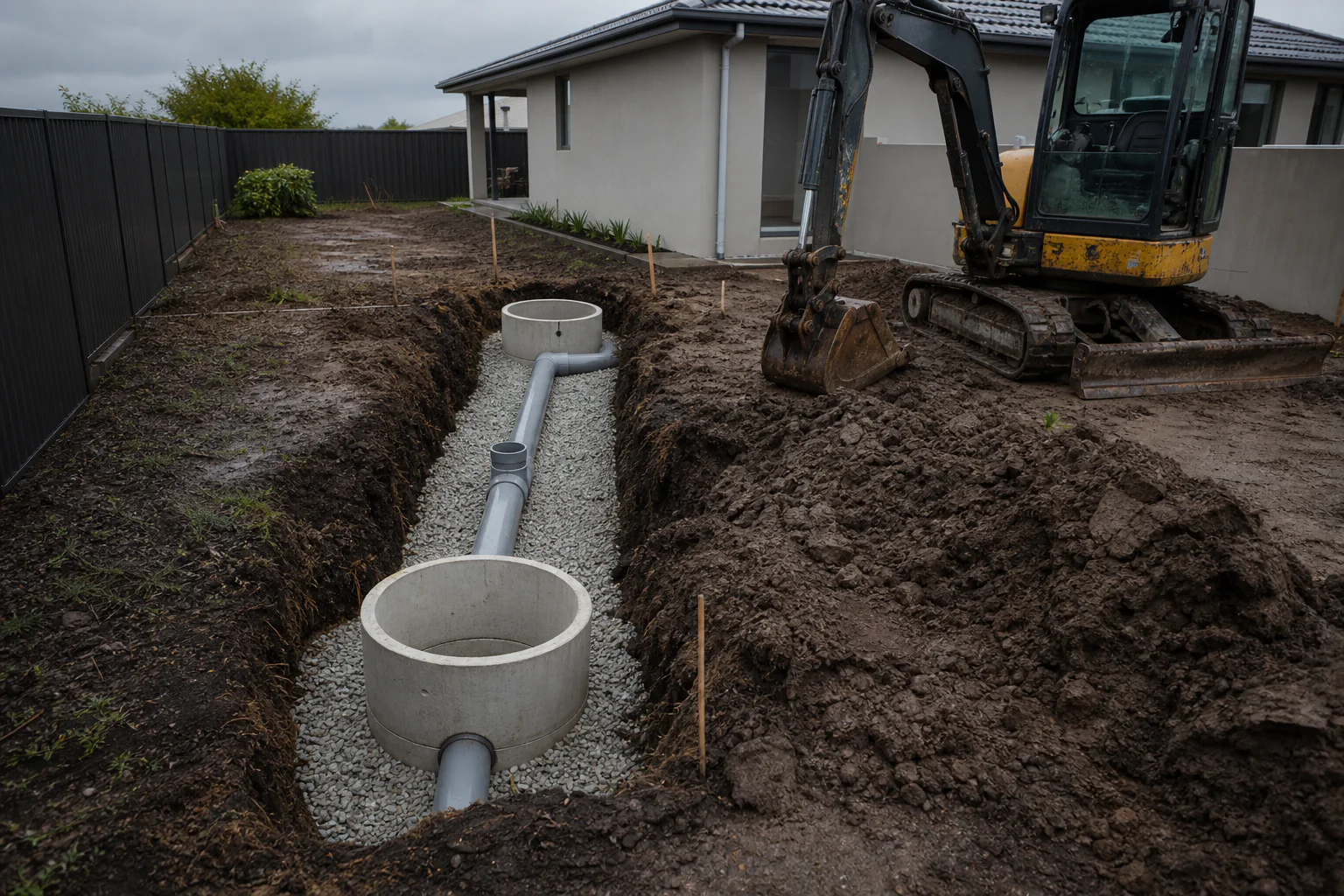
Soakage is a common way to deal with stormwater on site in parts of Auckland, especially on free-draining volcanic ground, and it only works if the sizing and position are right. We look at how well your soil drains, then work out the capacity needed from the roof area and expected rainfall, so you don’t end up with a unit that overflows in heavy rain. Soakage pits are dug in and set at the correct depth, using durable units and properly installed pipework that will keep working for years.
Everything is built to the relevant council standards, which matters most where all stormwater has to be dealt with on the property. Digging and installation run as a single process, so there are no handovers between contractors to slow things down. Having installed soakage pits on a great many Auckland properties, we understand how local ground affects sizing and placement, and that gives you a system that properly copes with runoff from your roof and paved areas.
Getting the site ready
Installing a soakage unit is quick once its position and connections are agreed. These four agree them.
The digging gear needs open access to the spot, which is usually close to a downpipe. Move anything that would sit in the way of excavation.
Let us know about buried lines near where the unit will go, so the hole can be dug without damaging anything already in the ground.
Tell us which downpipes are feeding into it. That lets the soakage unit be sized for the volume of roof water it will have to take.
Auckland clay can be slow to absorb water. Flag any drainage problems you know of in that area, so the chosen spot actually soaks water away.
Where we work
With stormwater handled on the property in many parts of Auckland, soakage is needed across the region, in established suburbs and new subdivisions alike.
We can install soakage pits on properties throughout the Auckland metro area.
Common questions
We work right across metropolitan Auckland, and regional or rural jobs can be looked at case by case. Include your suburb when you ask for a quote and we’ll confirm whether we can help.
Not always. Simpler jobs can often be priced from plans and photos, but sites with awkward access or a complicated scope are usually worth a visit first.
It depends on Auckland Council’s rules, your property and the scope of the job. Check what applies before anything starts—we can help you work out what to ask the council.
We cover residential, rural, commercial and civil work. Whether a particular job suits us comes down to access, programme, the plant needed and the confirmed scope.